
The modern job market has entered a new phase, defined not by candidate scarcity, but by a sheer volume of applications fueled by generative AI and automation tools. This explosion in application count is overwhelming recruiters and forcing software companies to develop sophisticated digital countermeasures.
The scale of the problem is becoming starkly clear. According to the CEO of Workable, a leading Applicant Tracking System (ATS) provider, roughly 10% of the job applications flowing through their platform—tens of thousands every day—are submitted by AI mass-apply tools. These aren’t necessarily fake profiles, but they are often low-intent, resulting in noise like duplicates and one-time proxy emails that clog up the hiring funnel.
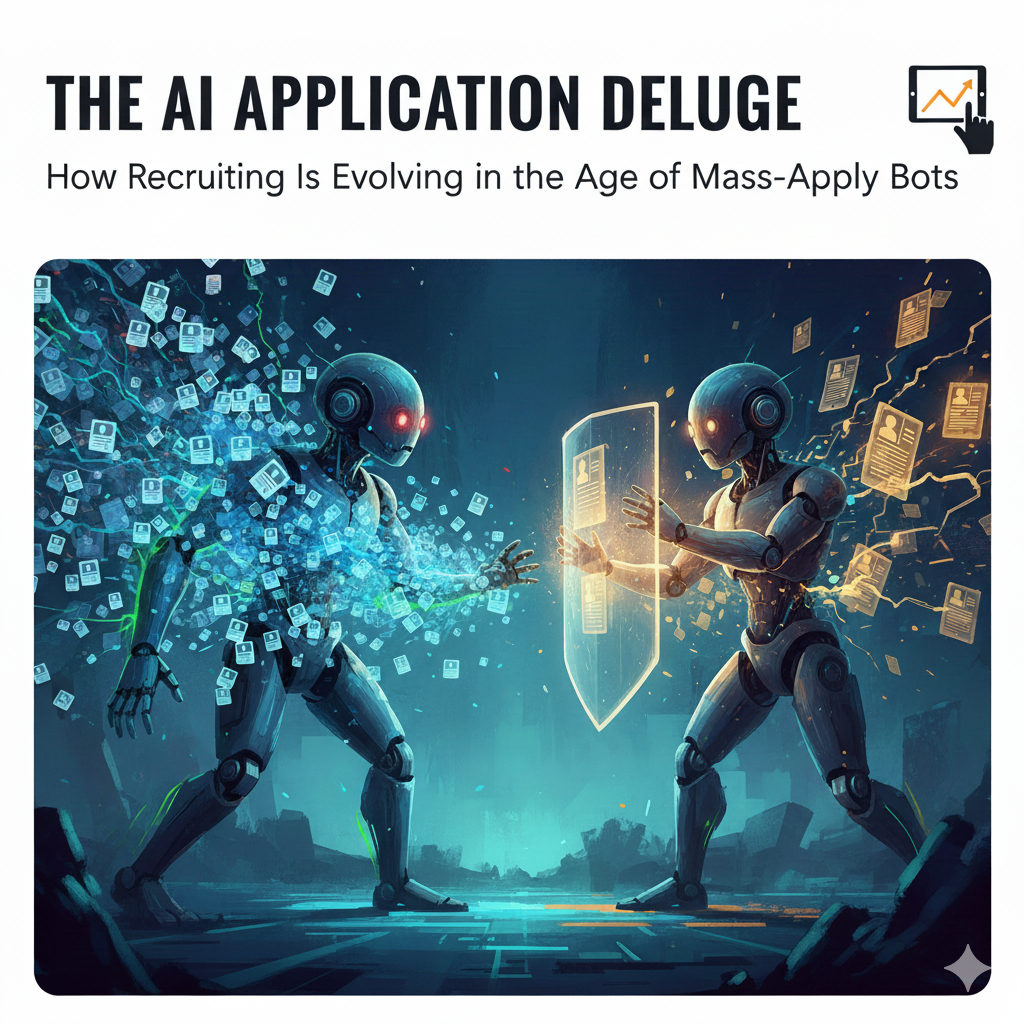
The New Reality: Drowning in Volume
The data supports this dramatic shift. Generative AI tools have made mass application easier than ever, with LinkedIn reporting an average of 11,000 applications submitted per minute on its platform, marking a significant year-over-year increase. Consequently, some hiring managers report application volumes have tripled for single positions, with the number of qualified candidates remaining constant.
This spike in volume is driven by candidates leveraging new technology: surveys indicate that up to 45% of applicants are now utilizing AI to complete or assist with applications. While AI-assisted resumes can be highly effective—some data suggests these applications receive a callback rate of 15%, compared to 2% for manual submissions—they create a signal-to-noise crisis. A staggering 74% of hiring managers report having seen AI-generated content in applications, fueling frustration and concern among recruiters tasked with sifting through the deluge.
The Solution: Meeting Automation with Intelligence
The consensus among HR technology leaders is that blocking AI entirely is a losing battle. As the Workable CEO noted, “refusing AI-assisted applications in 2025 is a little like refusing applications that came from the web in 1997.” Agentic tools are becoming the new normal, and employers must adapt to capture resourceful talent using them.
Software providers like Workable are tackling this challenge head-on by evolving their platforms to fight automation with intelligence. Key strategies emerging to separate the signal from the noise include:
- Unmasking the Candidate: Tools are being developed to reliably unmask the actual human’s email address behind proxy submissions, allowing recruiters to reach the real person and properly deduplicate applications.
- Smart Filtering and Intent Scoring: Platforms are implementing sophisticated, AI-powered smart filters. These filters use signals only detectable by systems that process millions of applications to distinguish between low-intent, “spray-and-pray” automation and legitimate, targeted applications—even if they were AI-assisted.
- AI for the Recruiter: The ultimate countermeasure is equipping recruiters with their own AI screening tools. This approach creates an “AI vs. AI” scenario, where technology handles the sheer volume generated by candidate-side bots, freeing up human recruiters to focus on high-quality candidates and meaningful human interaction.
The job market is not going back to its previous scale. For employers to remain competitive and identify top talent, the infrastructure must be built to allow great hires to rise to the top—regardless of how they choose to knock on the door.