
The American workforce is navigating a complex landscape marked by escalating pressures and anxieties, as highlighted by a recent comprehensive survey of U.S. job seekers. Conducted by The Harris Poll and commissioned by Express Employment Professionals, the study paints a picture of individuals contending with amplified job demands, pervasive economic unease, and an increasing disillusionment with fundamental aspects of their employment.
The findings underscore a significant shift in the experiences and perspectives of those actively seeking new opportunities in the current economic climate.
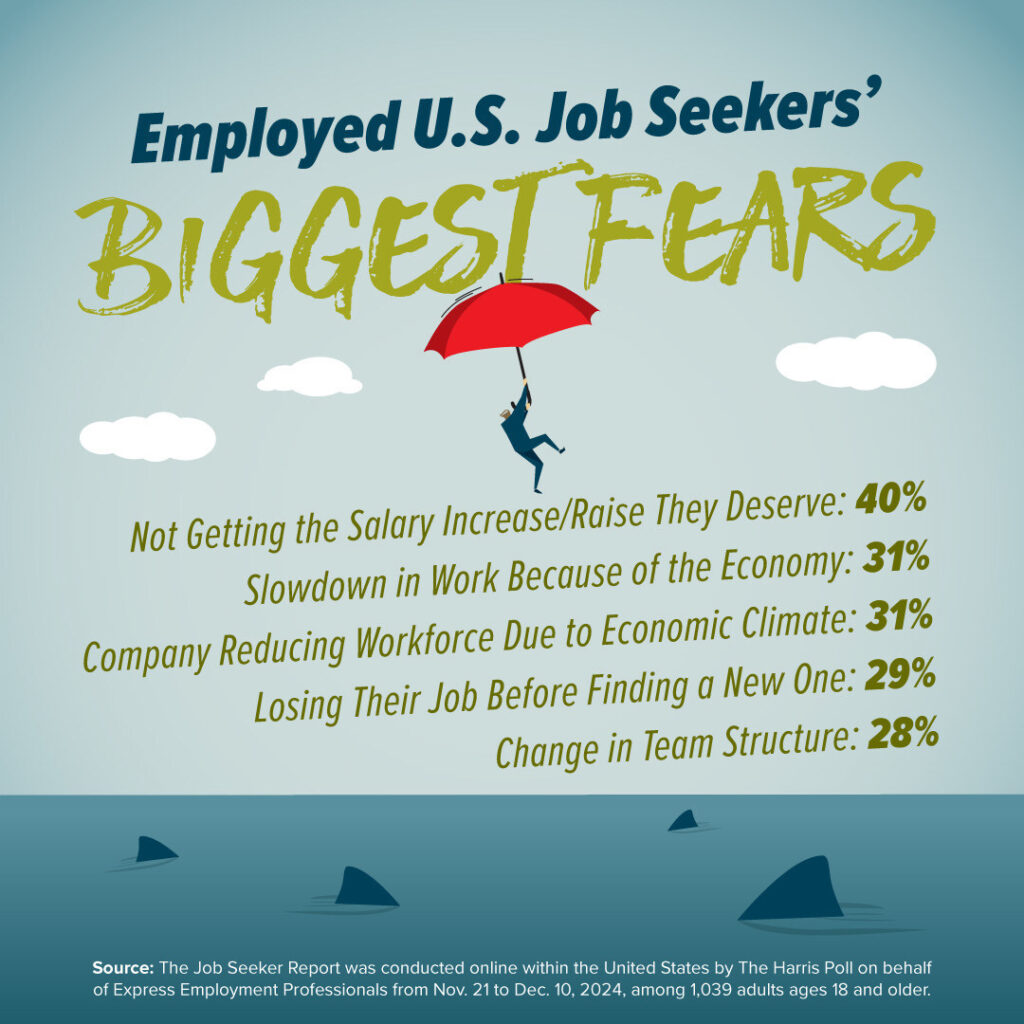
Despite their increased efforts, many job seekers are not optimistic about job security. Two in five cite not receiving the salary increase they deserve as a major concern (40%). In comparison, a significant portion (31%) is worried about a slowdown in work opportunities because of the economy. Concerns about workforce reduction and job loss compound these fears:
- About 3 in 10 job seekers (31%) fear their company may reduce the workforce due to the economic climate.
- Many (29%) worry about losing their job before finding a new one.
Generational differences reveal distinct concerns among job seekers. Younger generations, including Gen Z, millennials, and Gen X, are more likely to fear never getting promoted compared to their boomer/senior counterparts:
- Gen Z: 33%
- Millennials: 30%
- Gen X: 24%
- Boomers/Seniors: 13%
Additionally, concerns about technology or AI negatively impacting their role are rising, with 24% expressing this fear.
As job seekers navigate these challenges, they also face significant gaps between the importance of certain job aspects and their satisfaction levels with these areas at their current position. Salary, work-life balance and benefits show notable discrepancies, highlighting areas where employers could improve:
- Salary: 87% essential vs. 69% satisfied
- Work-life balance: 83% essential vs. 77% satisfied
- Benefits: 81% essential vs. 73% satisfied
- Opportunity for advancement: 78% essential vs. 63% satisfied
Gender differences further illustrate the diverse priorities among job seekers. Female job seekers are more likely than male job seekers to prioritize salary (90% vs. 85%) and work-life balance (89% vs. 79%), reflecting the different roles they may be balancing alongside their work.
When it comes to opportunities for advancement, younger job seekers place higher importance on them compared to their older counterparts:
- Gen Z: 79%
- Millennials: 85%
- Gen X: 74%
- Boomers/Seniors: 51%
Survey Methodology
The Job Seeker Report was conducted online within the United States by The Harris Poll on behalf of Express Employment Professionals from Nov. 21 to Dec. 10, 2024, among 1,039 adults ages 18 and older.