
NEW YORK — Employee loyalty is hitting new highs, but for many, it’s a marriage of convenience rather than a labor of love.
According to MetLife’s 2026 Employee Benefit Trends Study, a staggering 77% of workers intend to stay with their current employers. However, a deeper look at the data reveals a troubling “loyalty gap”: more than half (56%) of those employees are staying because they feel they have no other choice.
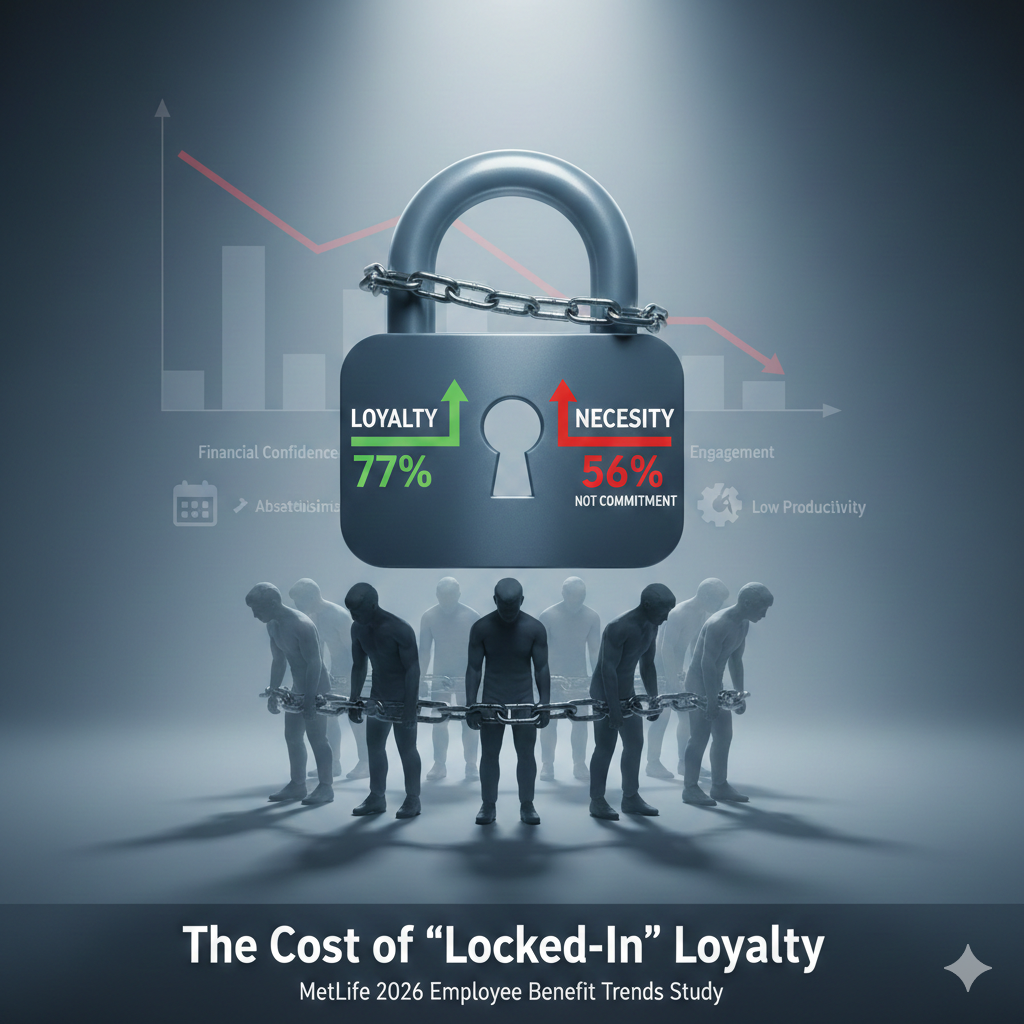
Retention vs. Resignation
While high retention rates usually signal a healthy corporate culture, the current trend is being fueled by a cocktail of financial anxiety and a volatile job market.
- Financial Stress: Employee financial confidence has plummeted to its lowest point since 2012.
- Risk Aversion: 31% of workers admit the primary reason they aren’t leaving is that the current job market feels too risky to navigate.
- The “Want” vs. “Need” Gap: Only 18% of employees say they are staying because they genuinely want to be there.
The Hidden Cost of “Quiet Staying”
This “need-based” retention isn’t just a morale issue; it’s a direct threat to the bottom line. The study highlights that employees who stay out of necessity rather than commitment are:
- 54% less likely to be holistically healthy.
- Only 50% engaged in their daily tasks.
- Higher risks for absenteeism and declining productivity.
“Retention alone can give employers a false sense of stability—even as wellbeing, engagement, and productivity quietly erode,” warns Todd Katz, Head of U.S. Group Benefits at MetLife.
The Solution: Building Real Connection
The data suggests that the antidote to a disengaged workforce isn’t just a paycheck—it’s connection. MetLife found that when employees feel “seen, valued, and supported,” the metrics shift dramatically.
| Benefit of Connection | Impact Level |
| Holistic Health | 3x more likely to be healthy |
| Employee Engagement | 2x more likely to be engaged |
| Genuine Loyalty | 3x more likely to stay by choice |
As the 2026 labor market continues to fluctuate, the report concludes that employers who focus on culture and comprehensive benefits will foster a resilient workforce, while those relying on “economic handcuffs” may find their long-term performance stalling.