
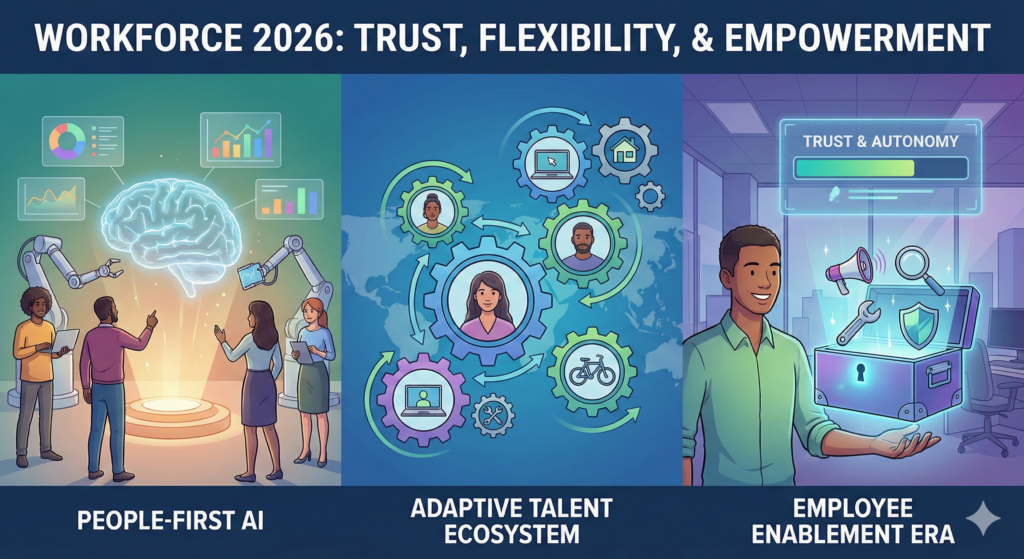
LOWELL, Mass. — As organizations look toward the future of work, a new report suggests that success in 2026 will depend less on technology itself and more on the trust and flexibility surrounding it. UKG, a leading global AI platform for HR and workforce management, has unveiled its annual predictions, highlighting three “megatrends” set to reshape the labor landscape: a people-first approach to AI, adaptive talent ecosystems, and a shift from employee engagement to true enablement.
“With the workplace changing faster than ever, leaders can no longer afford to read and react,” said Rachel Barger, President, GTM at UKG. “They need to use the workforce data and insights they have to anticipate what’s next and adapt quickly to shifting labor and market trends.”
Here are the three trends UKG forecasts will define the workforce in 2026:
1. The People-First AI Imperative
While artificial intelligence continues to dominate corporate strategies, UKG warns that adoption will stall without a foundation of trust. The report notes that two-thirds of organizations are currently “culturally unprepared” for AI transformation. Furthermore, only 53% of frontline employees believe their employers are adequately preparing them for an AI-driven future.
The solution, according to the findings, lies in cross-functional collaboration. By uniting IT, HR, and communications departments, organizations can build the trust necessary to unlock AI’s value. The report emphasizes that technology alone does not drive adoption—people do.
2. The Talent Ecosystem Reality
Facing shifting demographics and widening skills gaps, the traditional hiring model is no longer sufficient to solve the global talent crisis. UKG predicts a move toward a “Talent Ecosystem” that embraces agility.
This trend encourages companies to blend full-time, part-time, and gig roles with AI-enabled positions to create a more flexible workforce. Retention strategies will need to pivot toward upskilling existing employees and offering greater control over when and how they work.
3. The Employee Enablement Era
Perhaps the most significant cultural shift is the move from “engagement” to “enablement.” Despite billions spent on engagement programs, global engagement levels remain low. The report identifies a lack of autonomy as a primary culprit, citing that two in five employees lack the authority to make basic decisions, such as solving customer problems.
The “Employee Enablement Era” calls for leaders to provide teams with the necessary tools, decision-making power, and personalized support to do their jobs effectively. Research from Great Place To Work indicates that high-trust cultures can generate 42% more discretionary effort from employees, regardless of the economic climate.
Looking Ahead
UKG will discuss these trends in depth at its upcoming virtual HR and Payroll e-Symposium, “Understand Your Workforce,” scheduled for January 28, 2026. The event aims to help managers and employers leverage these insights to build more resilient, confident teams in the year ahead.