When the founder of a rising AI interview startup was recently asked about the single greatest hurdle in scaling his business, his answer wasn’t computational limitations, capital constraints, or data privacy. It was much more human: the “fear factor.”
As artificial intelligence integrates into the corporate world, human resources and talent acquisition departments are finding themselves at the epicenter of a profound technological shift. For recruiters, the rapid adoption of AI-powered interviewing platforms has triggered an existential anxiety. The underlying concern is clear and pervasive: If an algorithm can screen, interview, and evaluate candidates, what happens to my job?

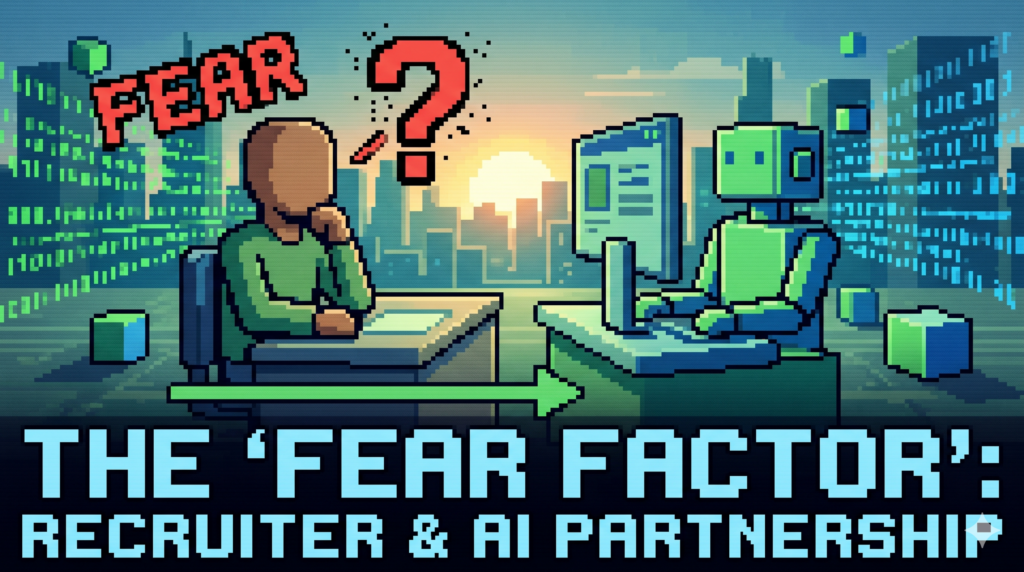
Anatomy of the “Fear Factor”
The apprehension felt by recruiters is entirely understandable. For decades, the core identifier of a skilled recruiter has been their “gut feel” and intuition during initial conversations—the ability to read between the lines, assess cultural fit, and gauge enthusiasm. When automation enters this highly interpersonal domain, it can easily feel like an encroachment on the human element of hiring.
However, this fear stems from a fundamental misunderstanding of what AI interview tools are designed to do. The goal of automated screening is not to issue final hiring verdicts or issue employment contracts autonomously. Rather, it is to solve a structural crisis that has plagued talent acquisition for over a decade: the overwhelming sheer volume of applications.
“Recruiters are often wary that AI is coming to replace them. In reality, the technology is built to rescue them from an administrative deluge so they can focus on what they actually love—building relationships with top talent.” — AI Interview Startup Founder
The Reality of the Modern Hiring Flood
With the rise of one-click applications, remote work options, and digital job boards, the friction of applying for a job has effectively dropped to zero. While this accessibility is beneficial for job seekers, it has created an unprecedented operational bottleneck for employers. A single job posting can easily attract hundreds, sometimes thousands, of resumes within days.
Faced with this flood, human teams confront a mathematical impossibility. A recruiter spending just a few minutes on each application cannot physically process the volume without causing extreme delays in the hiring cycle, or worse, succumbing to fatigue and missing exceptional candidates entirely. The result is the notorious corporate “black hole,” where applications vanish without a trace, damaging candidate experience and employer branding.
Augmentation over Replacement
This is exactly where AI interviewing shifts from a perceived threat to an invaluable tool. Instead of replacing the recruiter’s judgment, AI augments it by serving as an incredibly efficient structural filter.
By leveraging asynchronous conversational AI or intelligent screening interfaces at the top of the funnel, the technology can engage with every single applicant instantly. It evaluates basic competencies, clarifies technical alignment, and synthesizes structured insights.
How AI Empowers the Modern Recruiter
Instead of spending 80% of their time sorting resumes and conducting repetitive 15-minute phone screens, AI elevates recruiters into strategic partners. It shifts their focus from manual data processing to high-value human connection.
When the AI passes data back to the human HR professional, it doesn’t deliver a single automated decision. It delivers a deeply analyzed, structured shortlist of candidates complete with objective highlights. The recruiter is then freed from the administrative burden and can dedicate their energy where humans excel:
- Deep Relationship Building: Spending quality time understanding the career aspirations, values, and nuanced cultural alignment of top-tier candidates.
- Strategic Advocacy: Actively selling the company’s vision and culture to passive candidates who require a human touch to be convinced.
- Complex Decision-Making: Navigating sophisticated hiring requirements, managing internal stakeholder expectations, and negotiating competitive compensation packages.
Conclusion: A Future of Shared Intelligence
The “fear factor” in talent acquisition is a natural phase of technological transition, but it is ultimately unwarranted. AI is not a surrogate recruiter; it is a mechanical lever. By absorbing the crushing weight of the modern application flood, AI allows recruiters to step away from repetitive screening and return to the deeply human, relational roots of their profession.
Ultimately, the future of hiring does not belong to algorithms alone—it belongs to the augmented recruiter who leverages AI to build faster, fairer, and more human connections.