NEW YORK — The workplace flexibility wave that redefined marketing over the past several years is continuing to ebb.
According to the Q2 2026 U.S. Marketing Jobs Report, released by executive search firm Taligence and labor market intelligence company Aspen Technology Labs, fully remote marketing positions experienced a steady retreat throughout the second quarter of 2026, signaling that employers are cementing more permanent hybrid and in-office working policies.

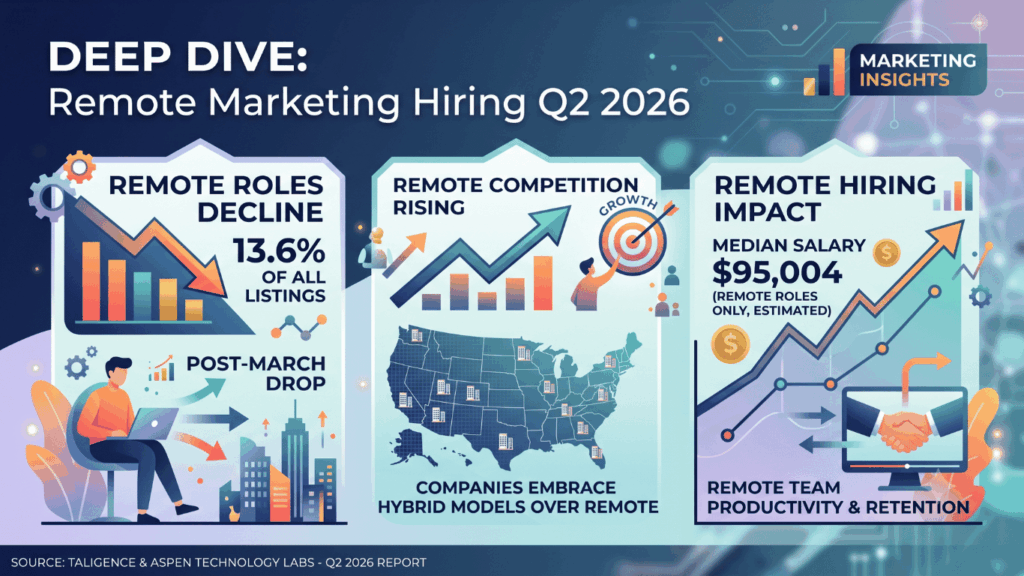
Key Remote Hiring Takeaways (Q2 2026)
- 13.6% Market Share: Fully remote roles made up just 13.6% of all in-house marketing listings in Q2 2026.
- Post-March Decline: After reaching a localized peak in early March, the share of remote listings dropped consistently through June.
- Shift to Structured Hybrid: Employers are increasingly favoring structured hybrid setups or full in-office requirements, even for specialized marketing disciplines.
Flexibility Retreats Despite Strong Overall Hiring
The pullback in remote opportunities comes during a period of resilience for the broader marketing talent market. Active in-house marketing job listings rose 7.1% year-over-year at the end of Q2—outpacing the overall U.S. labor market growth of 3.7%.
However, employers are placing tighter boundaries around where and how work gets done:
Q2 2026 Marketing Work Arrangements (In-House)
┌──────────────────────────────┬────────┐
│ Arrangement                  │ Share  │
├──────────────────────────────┼────────┤
│ In-Office / Hybrid           │ 86.4%  │
│ Fully Remote                 │ 13.6%  │
└──────────────────────────────┴────────┘
The data, compiled from an analysis of more than 86,000 full-time, in-house marketing job postings, suggests that while companies are still investing heavily in marketing talent—particularly for growth-focused and senior-level roles—they are far less willing to offer full location flexibility than they were in previous years.
Experienced Marketers Wanted, But Off-Site Flexibility Shrinks
The retreat from remote hiring coincides with a market that has become far more selective overall:
- Senior Talent Dominance: Hiring for Director-level positions and above surged 17.3% year-over-year, driven by demand in revenue-aligned areas like Growth Marketing, Partner & Channel Marketing, and Brand Marketing.
- Entry-Level Slump: In contrast, entry-level marketing listings tumbled 16.4% quarter-over-quarter (down 4.0% year-over-year), as organizations concentrate budgets on high-impact, experienced talent.
- Salary Pressures: The median advertised marketing salary rose to $95,004 (+11.8% YoY), partly driven by the concentration of senior roles—roles that historically carried remote perks but are now increasingly tied to regional hubs or corporate headquarters.
What It Means for Job Seekers and Employers
For marketers seeking fully remote roles, the shrinking pool means higher competition and potentially lower negotiating power regarding location flexibility.
“The market isn’t pulling back on marketing investment, it’s becoming much more selective about where that investment goes,” noted Michael Wright, CEO of Taligence.
While demand for experienced marketers who can drive bottom-line growth remains elevated, employers are using their leverage to bring teams back together under one roof or into predictable hybrid schedules, marking a clear end to the era of unrestricted remote work in corporate marketing.